
That I would end up speaking Dutch in the heart of Anatolia was something I truly never expected. Not because there are so many tourists here. But because, decades ago, many families emigrated from the small villages nestled among Cappadocia’s extraordinary rock formations, more than 1,000 metres above sea level, to the Netherlands. Today, their children and grandchildren are returning—some just for the summer, others for good. They carry Türkiye in their hearts and speak Dutch with one another.
So there I am, arranging our place to stay for the night… in Dutch. Standing in front of a mosque, surrounded by twenty-seven people, all enthusiastically offering ideas about where we could spend the night.
The last twenty kilometres had been tough. Until now, climbing uphill had been my least favourite part of cycling. Now I know what is even harder: climbing uphill into a headwind. By the time we finally reach our destination—a green-lit minaret that has guided us through the mountains and against the wind for the last hour—it is already dark.
Our plan to pitch our tent up here quickly disappears. It seems as if half the village is communicating with one another, all concerned about our well-being. In the end, we are offered a room next to the mosque. We have an entire cushioned room to ourselves—simple, surprisingly clean, and absolutely wonderful.
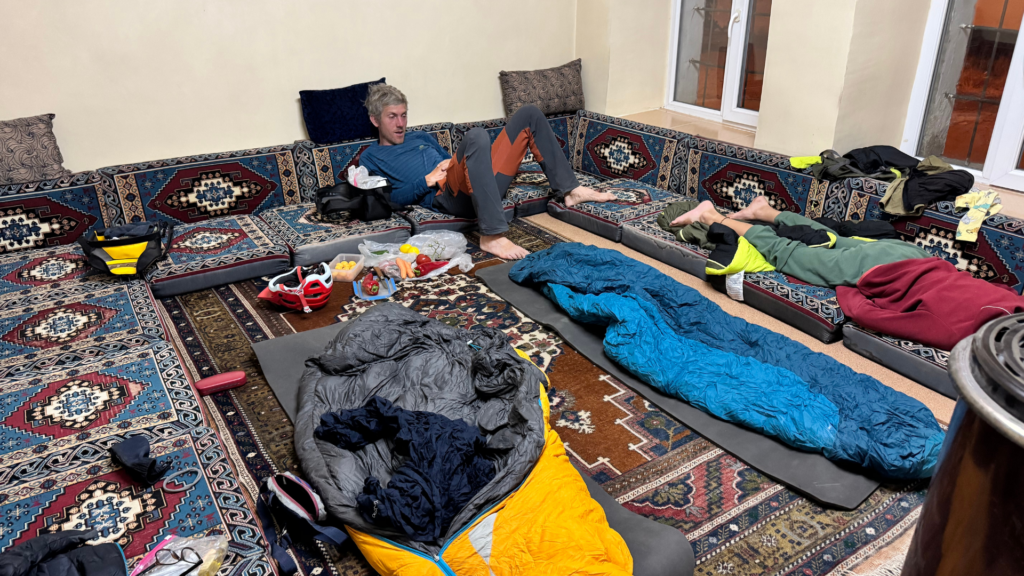
While Lukas and Petur fall asleep almost instantly, I lie awake, letting the past days and weeks replay in my mind. Not before enjoying a few more freshly picked apricots that taste like jam. They are in season now and seem to be gifting themselves to us everywhere we go. For me, pure happiness is letting a wrinkled, soft, sun-ripened apricot melt on my tongue, tasting so incredibly rich that it feels as though the whole world is contained within that single piece of fruit. Mulberries are everywhere too—almost black, and some as large as plums.
A quick update in case you haven’t been following our journey: I had to return to Germany for work in between. I travelled there by bus and hitchhiked from Vienna, but unfortunately had to fly back. I really did everything I could to organise the return journey by bus via Belgrade (where my bike had been stored) and on to Istanbul. But the transport rules of some bus companies, combined with my online courses (I work while we’re travelling), our schedule—largely determined by visa regulations and the changing seasons—and our budget, simply made it impossible.
In any case, I was incredibly happy to be reunited with the part of my family I’m currently cycling the world with. (Although I miss our two older girls deeply.)
The boys had cycled from Belgrade through Bulgaria into Türkiye at such an astonishing pace that I was greeted by a completely exhausted Petur.
So our first week back together was a slow one. Our first destination was Istanbul. We still had fifty kilometres to ride to reach the city centre, in a heat I was only just beginning to get used to. At first, we stopped at nearly every little çay shop along the way—for cold sparkling water and, of course, black tea, the çay we are offered with such generosity wherever we go.
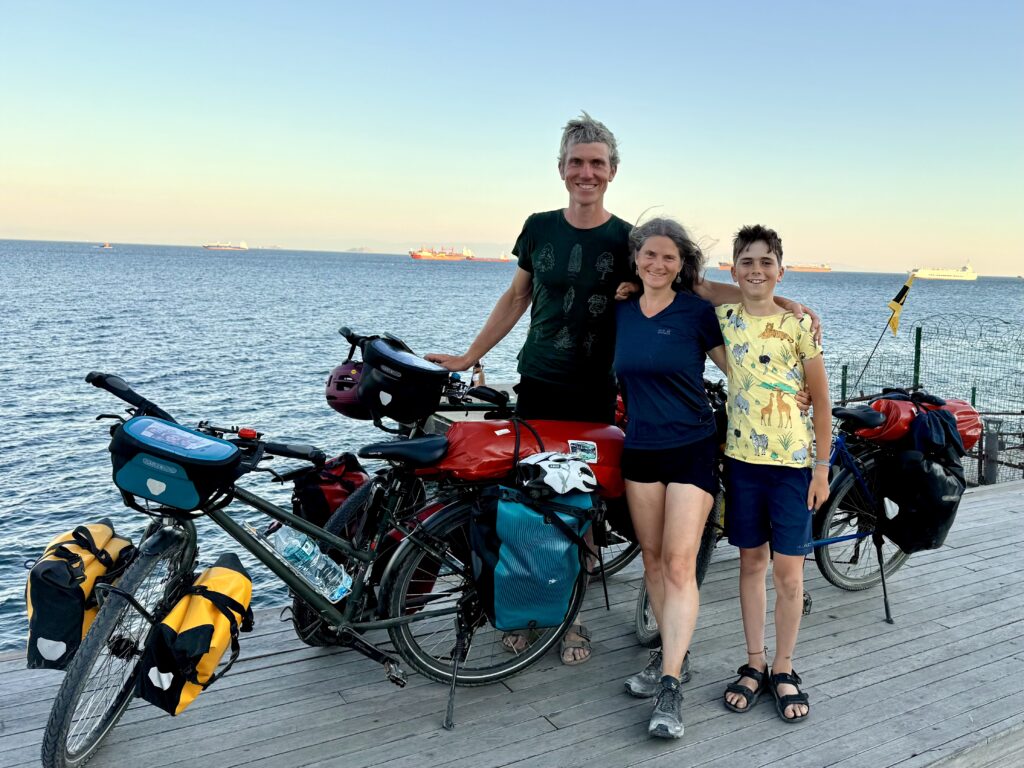
Istanbul was just as breathtaking as we remembered. The magnificent mosques, the bustling bazaars, the people. Quite unexpectedly, we found ourselves at a peace vigil calling for an end to the genocide in Gaza. It was deeply moving to witness so many people gathered in solidarity. On a much deeper level, we could feel how closely many people around us identify with the culture and faith of the Palestinian people. We saw many tears, and we felt our own sadness too. It breaks our hearts that wars continue to exist in this world. We do not believe any war is justified. Our hearts stand for nonviolence—as consistently as we can possibly live it.
That evening, our son’s self-chosen lesson was obvious: Judaism. Antisemitism. The Middle East conflict. Together we immersed ourselves in more than 3,000 years of history. I mention this for those who occasionally wonder, “But what does a child actually learn on a journey like this?”
What our son is learning above all is tolerance, compassion and generosity. To us, these qualities matter far more than anything found in a school textbook. I believe these experiences will stay with him for the rest of his life. When people one day speak about “Muslims,” I don’t think his first thoughts will be shaped by headlines. Instead, he will remember the people who opened their homes to us, poured us tea, and welcomed us as if we were part of their own family.
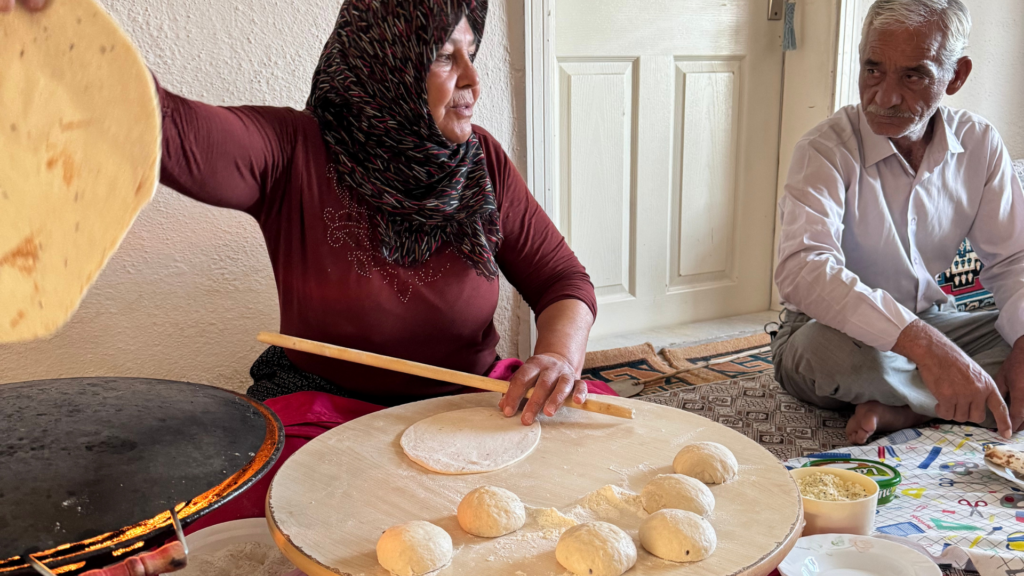
Every day, I notice some of my own subtle assumptions and preconceptions about Islam quietly falling away. What we encounter are people for whom compassion, generosity, open-heartedness, honesty, trust and humility are not just ideals, but qualities they genuinely embody and live by.
We don’t want to paint Türkiye in shades of pink. Like every country, it has its challenges and its shadows.
And yet, we allow ourselves to celebrate this culture of selfless generosity. Because generosity opens hearts. There is even scientific research showing this. Giving and receiving soften the boundaries between “mine” and “yours.” And as Germans, I believe there is a great deal we can learn from this.
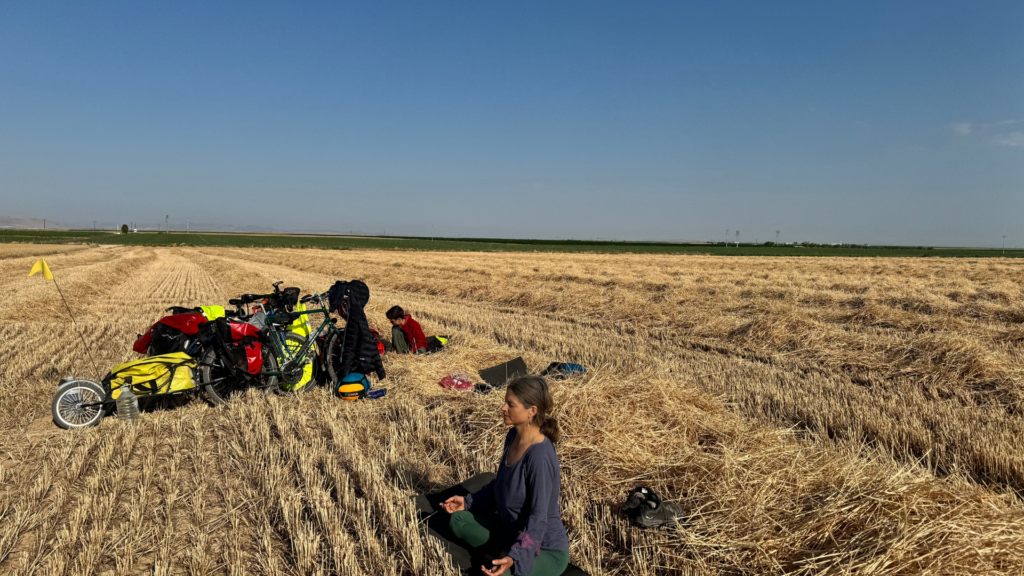
In fact, one of the ways we are learning generosity ourselves is by accepting invitations. Sometimes, after a long day of cycling, sleeping under a sky full of stars beside a harvested wheat field would honestly feel easier than spending two hours communicating through a translation app (thank God for that app!) before settling into a room that may well be filled with cigarette smoke. And yet, again and again, saying yes to these invitations turns into one of the greatest gifts of our journey.
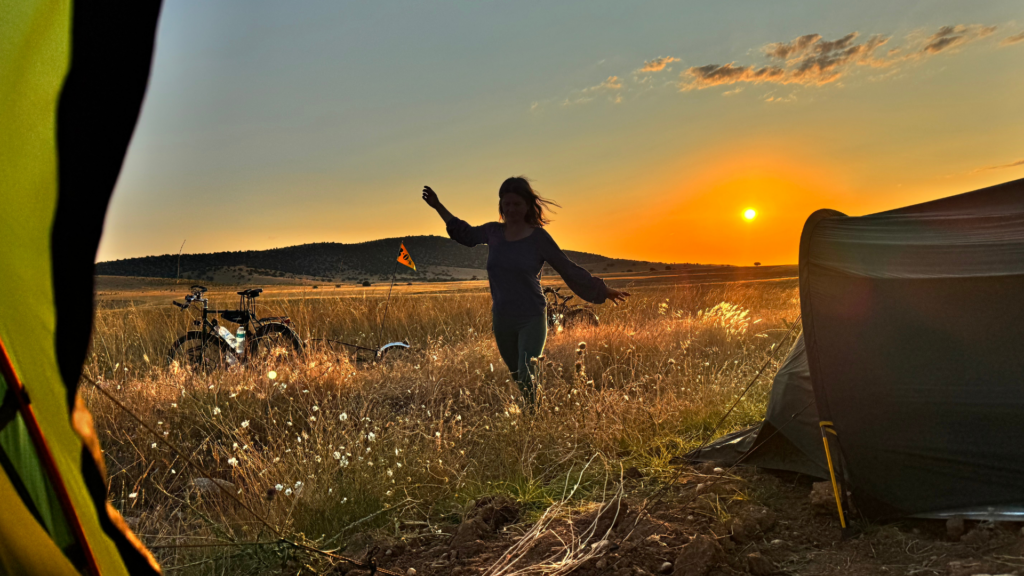
More and more, we are beginning to understand that giving and receiving are, in essence, the same thing.
Here are just a few examples from the past days—without even mentioning the countless homes we’ve been welcomed into or the incredible dinners and breakfasts we’ve shared.
The police stop us. Instead of asking for our passports or giving us trouble because we’re staying in a place where camping isn’t allowed, they hand us biscuits and water and ask if we need anything.
We’re cycling along a busy four-lane road. The car in front of us suddenly pulls over. The driver gets out and hands us two kilos of cherries.
We’re sitting on a park bench in a small town. Within moments, three glasses of tea appear in front of us.
Wherever we go, we are welcomed warmly. We’re offered a bed, food, and genuine hospitality. It seems completely natural here. And we can see how happy people are when we accept their invitations.
To avoid creating a romanticised picture: we are cycle travellers, often riding through remote mountains, vast steppes and quiet countryside. Sometimes we don’t meet another person for days. We live on bread, cucumbers, tomatoes, lentils and oats, and wash ourselves at public fountains—far less often than I would personally like. We sleep outdoors, sweat through the heat, and our bodies are covered in layers of sunscreen, dust and perspiration. We are strangers in this country. Yet none of that keeps people from approaching us, welcoming us, and inviting us into their homes.
Yesterday, I found myself in tears when a childhood memory surfaced. I remembered a Kurdish refugee family moving into the house next door to ours. I cannot recall that we ever invited them over for a meal—not even once.
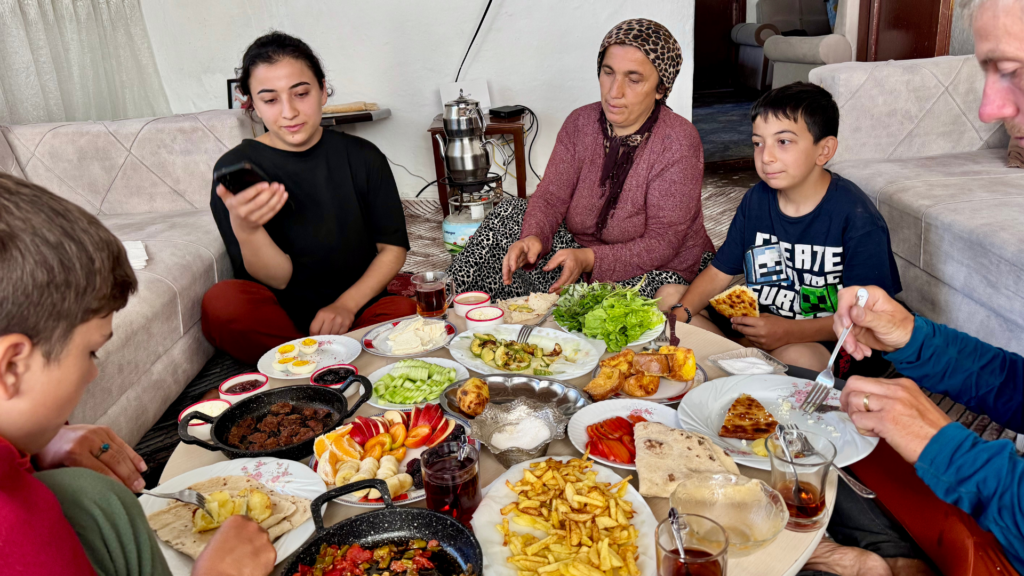
A few days ago, we woke up to this breakfast, lovingly prepared by an incredibly open-hearted Kurdish family:
We share our experiences on Instagram, and thousands of people have responded—especially people with Turkish roots who now live in Germany.
Many of them have poured out their hearts to us. They tell us childhood memories of visiting German families and, when lunchtime came, being asked to wait in another room. Others share stories of times they needed help in Germany but were treated as though they didn’t really belong.
There are so many stories like these, and they touch us deeply. We can feel the hurt and the sense of exclusion that many people still carry. They make us reflect on the kind of people we want to be. We hope to keep growing in our own capacity for generosity—because generosity can also mean giving someone the feeling that they are safe, welcome, and that they truly belong.
Here in Türkiye, we feel remarkably safe. If someone wakes us in the middle of the night while we’re sleeping out in a field, we now almost automatically assume that they have come to check whether we’re alright.
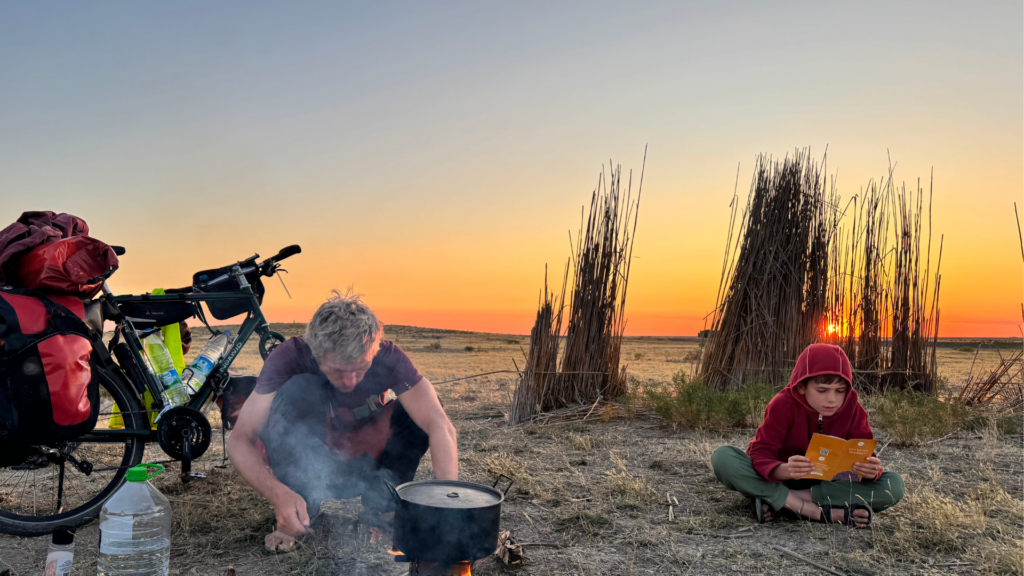
What if we all looked out for one another like this? What if we moved through life asking, “Do you need anything? Is there something I can do for you?”
Generosity has many different faces. If you’ve taken the time to read this far, that’s one of them. Letting us know you’ve been here could be another. It truly is a gift to us that you are following our journey. Thank you.
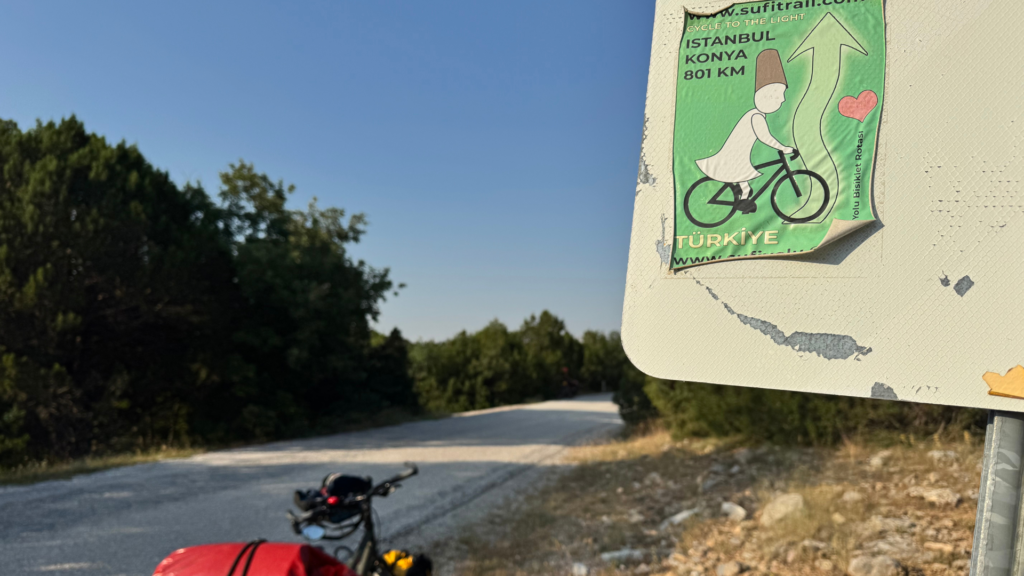
Oh, and perhaps you’re wondering where our route took us next. We followed the Sufi Trail—the very path we walked four years ago with two of our children. From Istanbul, we crossed by ferry to Yalova and continued via İznik to Konya. But that’s a story for another article.
Wherever you are as you read these words, we wish you well. We hope you can trust life a little more today, and that you feel surrounded by love.
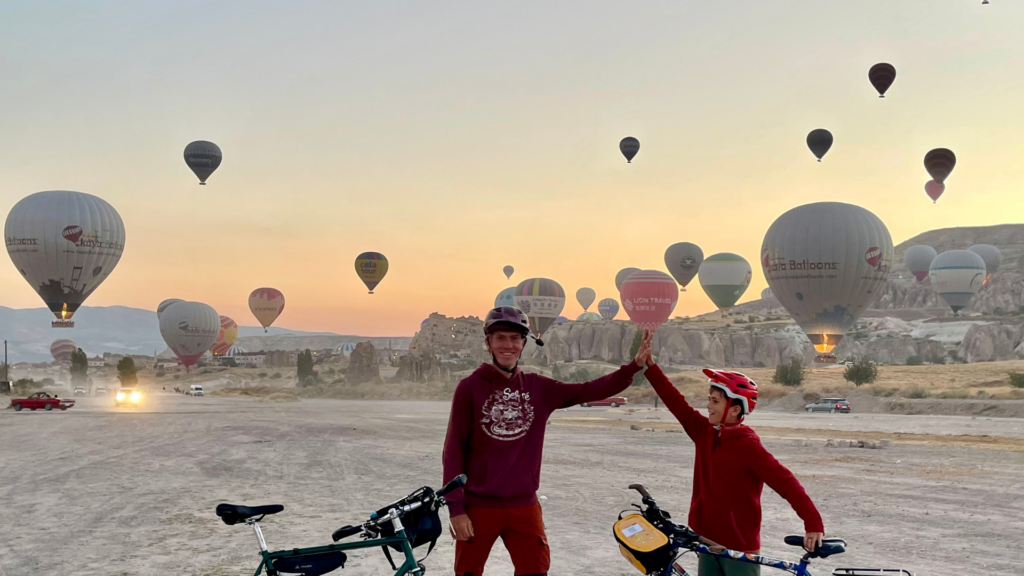
With our warmest greetings from Avanos—where we are writing the final lines of this article. This morning, Lukas and Petur got up at four o’clock to experience one of Cappadocia’s most breathtaking sights: hundreds of hot air balloons rising into the sky, carrying visitors high above the region’s extraordinary rock formations.
With love,
Nirmala (author)
Lukas (who kindly helped shape this article)
➡️ We post almost daily on Instagram
➡️ If you enjoy reading our article, we are most happy if you let us know or even contribute financially to our journey. We are travelling very low budget and your donations supports us with a night in a hotel, buying a fresh juice, visas or helping with our equipment. You could donate via this link: GoFundMe Link. Thank you! We really appreciate it!